
Breast Cancer Screening Recommendations and Rationale
The question of when to start breast cancer screening for average risk individuals has been a hot topic in recent years in Canada, so I wanted to take some time to present the current recommendations and their rationale.
U.S. Preventative Services Task Force Recommendations
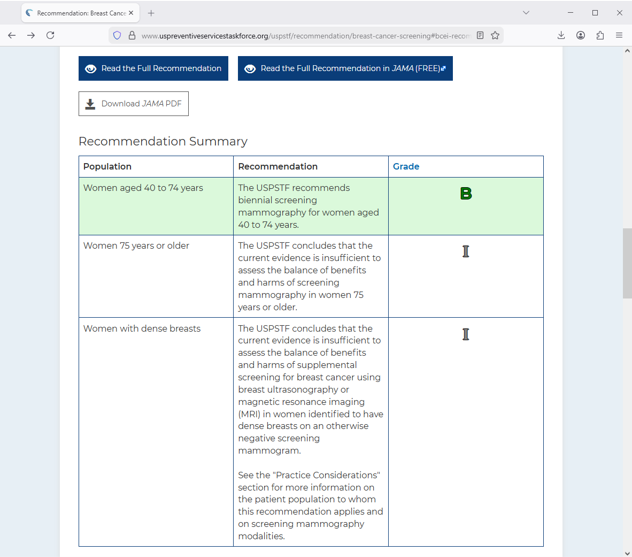
In the United States, the U.S. Preventative Services Task Force changed their recommendations in 2024 to recommend that women between 40 and 74 years old receive screening every 2 years. This was changed from its previous guidelines that advised starting at 50 years old.
USA – Breast Cancer Trends (Under 50 Years Old)
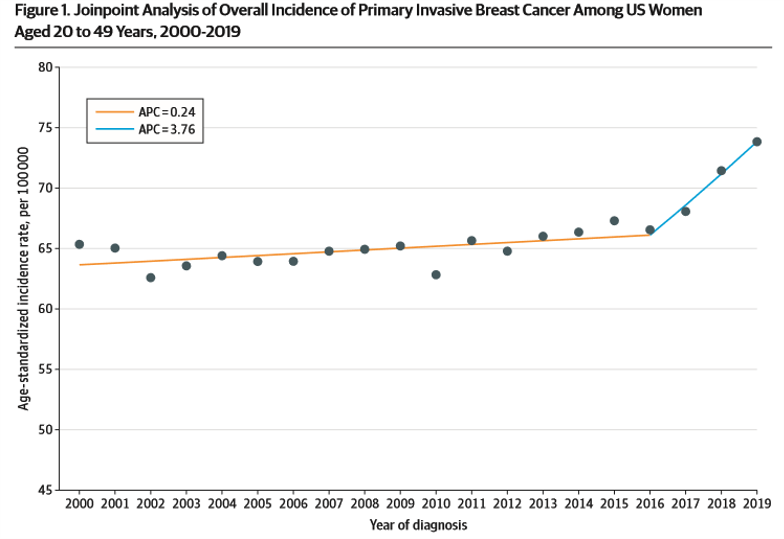
The reason for this change in the guidelines is due to the rise in breast cancer in the under 50 age group in the US.
Canada – Breast Cancer Trends (Under 50 Years Old)
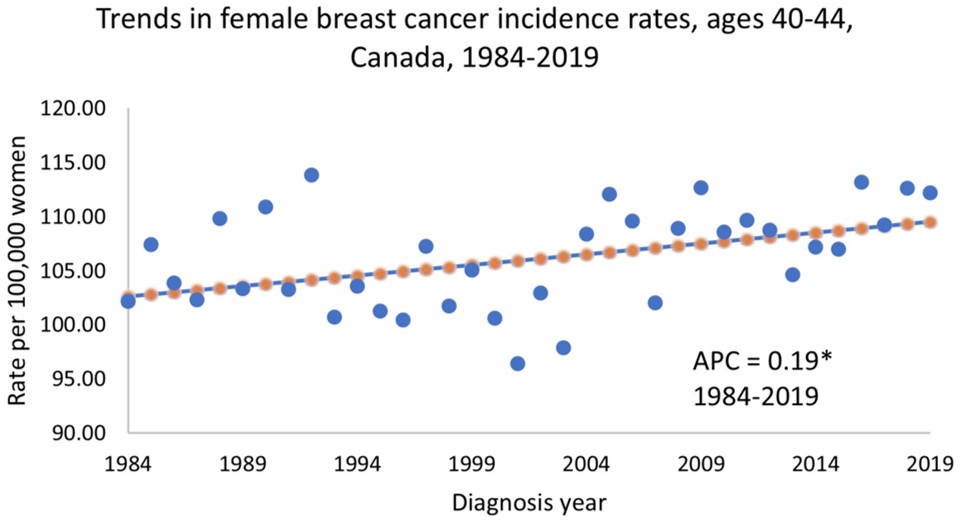
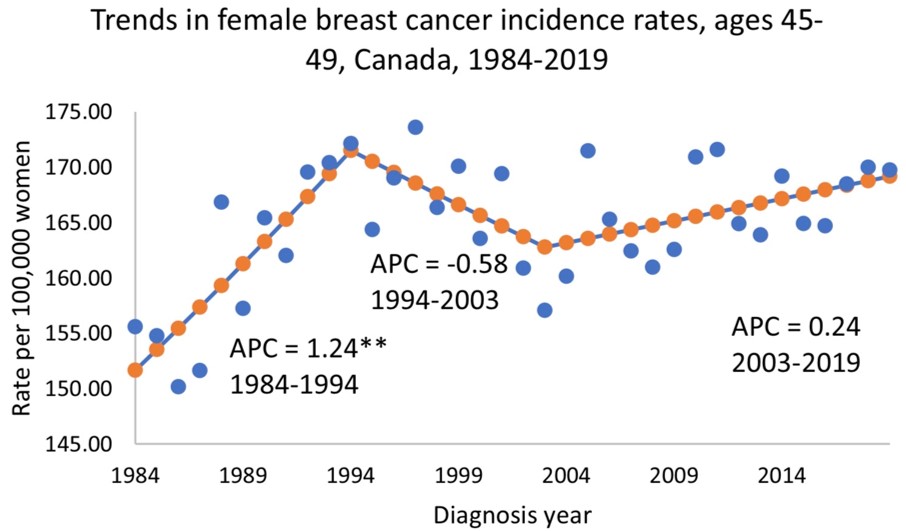
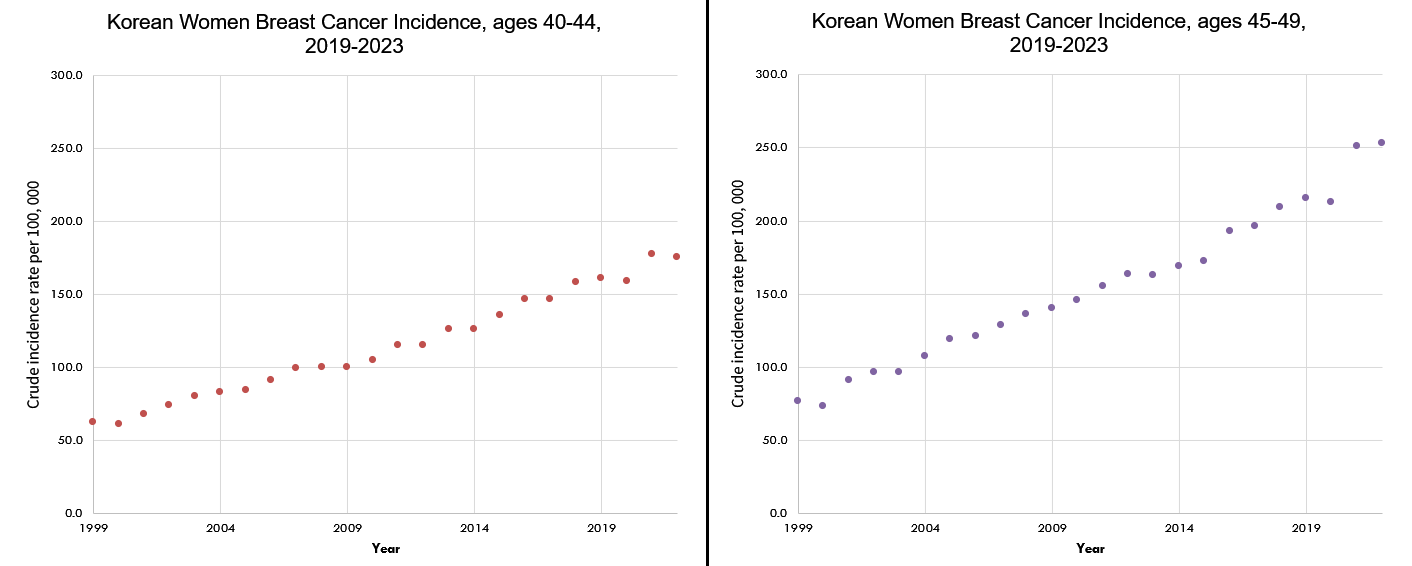
This worrying increasing trend of breast cancer unfortunately has also been observed in Canada.
Korea – Breast Cancer Trends (Under 50 Years Old)
It seems to be a global phenomen, as a similar trend is also seen in South Korea.
Canadian Task Force on Preventive Health Care’s Draft Guidelines
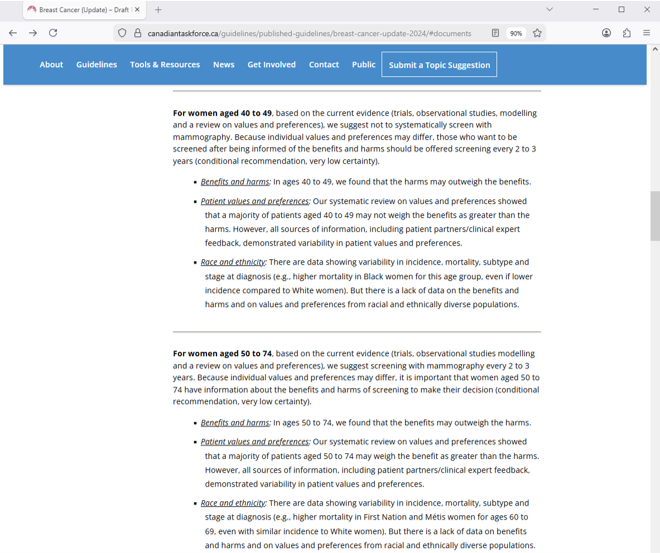
The Canadian Task Force on Preventive Health Care’s draft guidelines differ slightly in that they suggest screening every 2-3 years for women aged 50 to 74. For women aged 40-49, they suggest against systemically screening, but those who choose to be screened after being informed of the benefits and harms should be offered screening every 2 to 3 years. I will discuss some of the benefits and harms in a future post.
Canada – Age-Specific Breast Cancer Incidence Rate
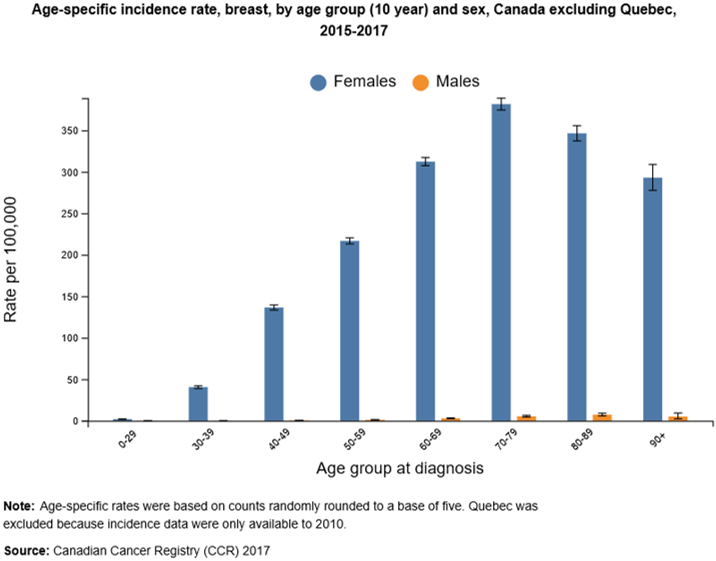
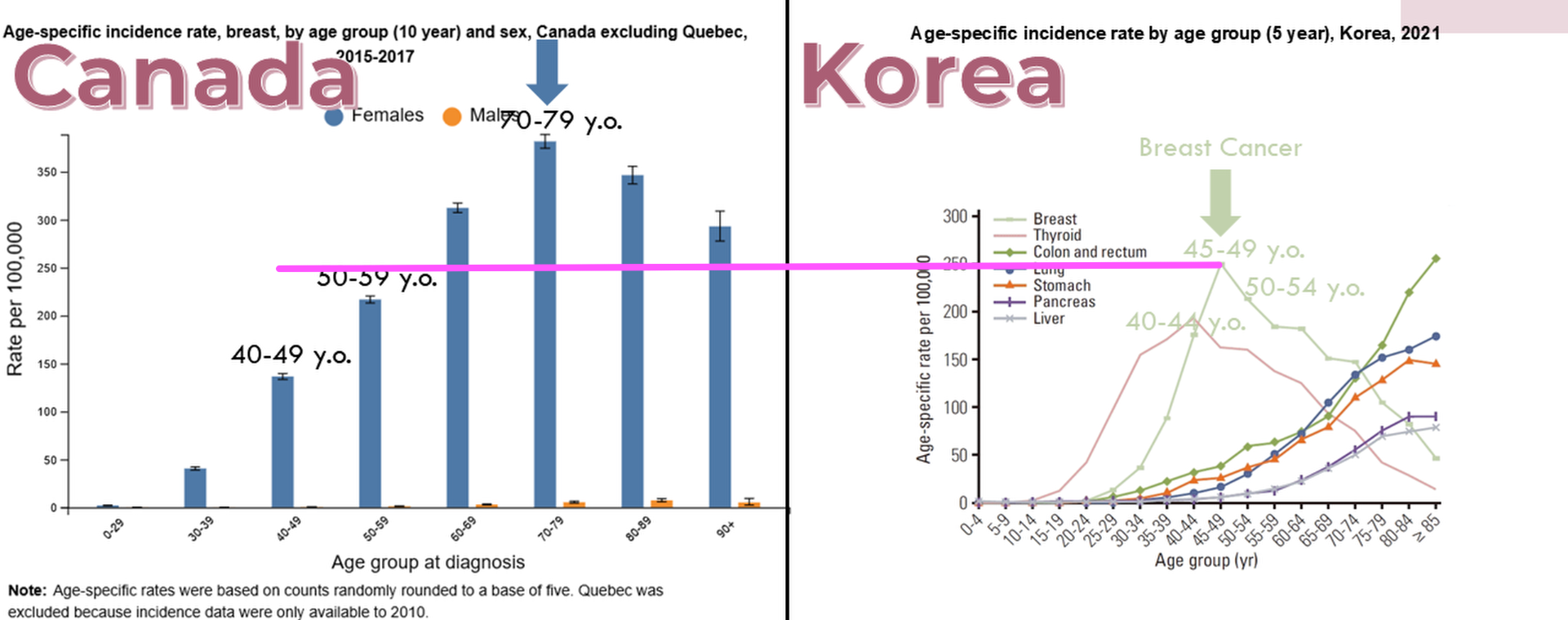
The difference in how they worded their recommendations stems from the fact that Canadian statistics show that breast cancer risk increases as women age, making the benefits of screening clearer for those between 50 and 74. For women in their 40s, the decision is more nuanced, so the Task Force emphasizes personal choice rather than a blanket recommendation.
South Korea’s National Breast Cancer Screening Program
On the other hand, South Korea’s national breast cancer screening program has provided screenings every two years to women aged 40 and older since 2002.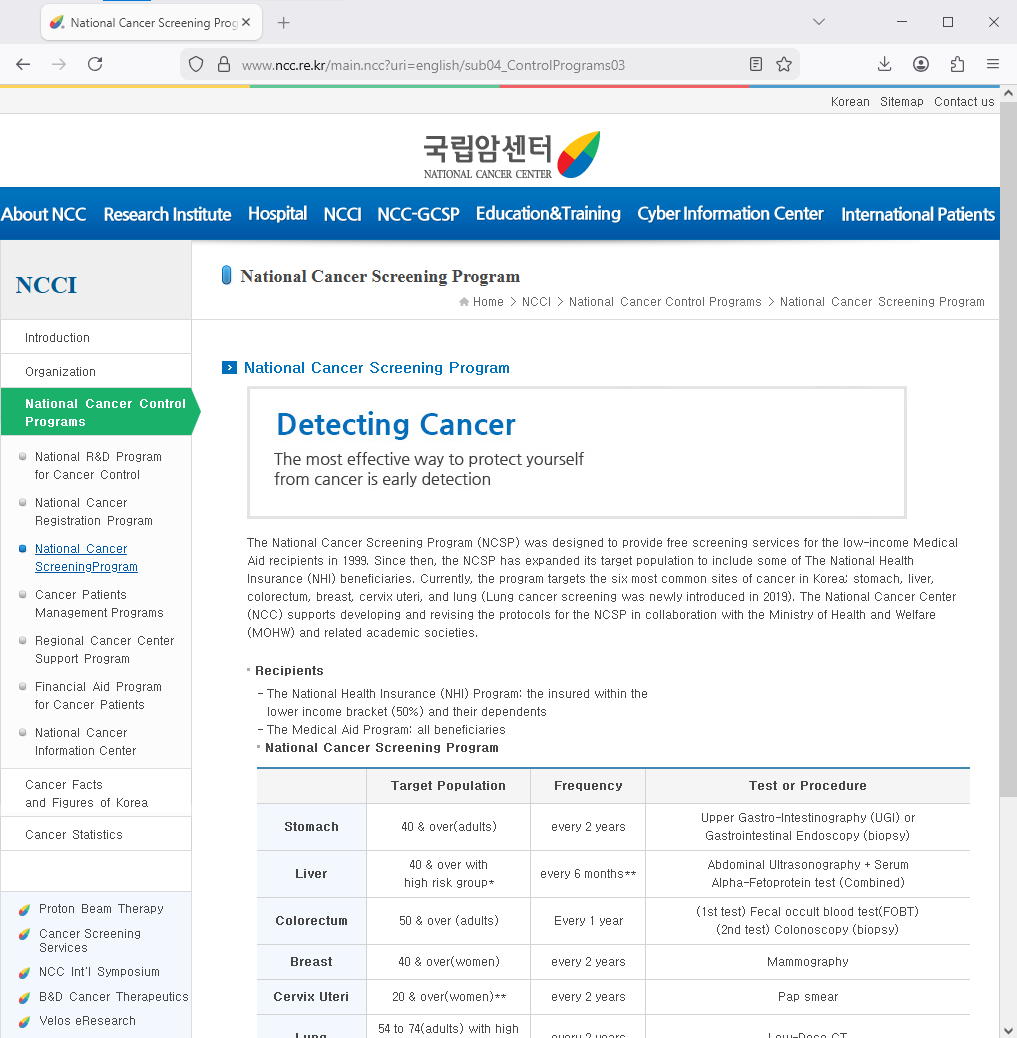
South Korea – Age-Specific Breast Cancer Incidence Rate
This is because the peak incidence of breast cancer in the Korean population consistently appears among women in their 40s.
In contrast, in Canada, the peak incidence of breast cancer occurs among women in their 70s.
We can also see that there are more women in their 40s in the Korean population diagnosed with breast cancer compared to the Canadian population. I tried to make the y-axis line up to make it easier to compare.
Asian-American and Korean-Canadian Age-Specific Breast Cancer Incidence Rate
As you may be wondering if the trend looks different for people of Korean-ethnicity living in North America, the US data for Asian-Americans is shown below.
It seems that Asian-Americans don’t have the same peak in breast cancer incidence in the 40-49 age group that is seen in the Korean population.
The Canadian data for individuals of Korean ethnicity living in Canada is similar to the US data for Asian-Americans, with the graph showing a steady increase with age rather than a peak in the 40s.
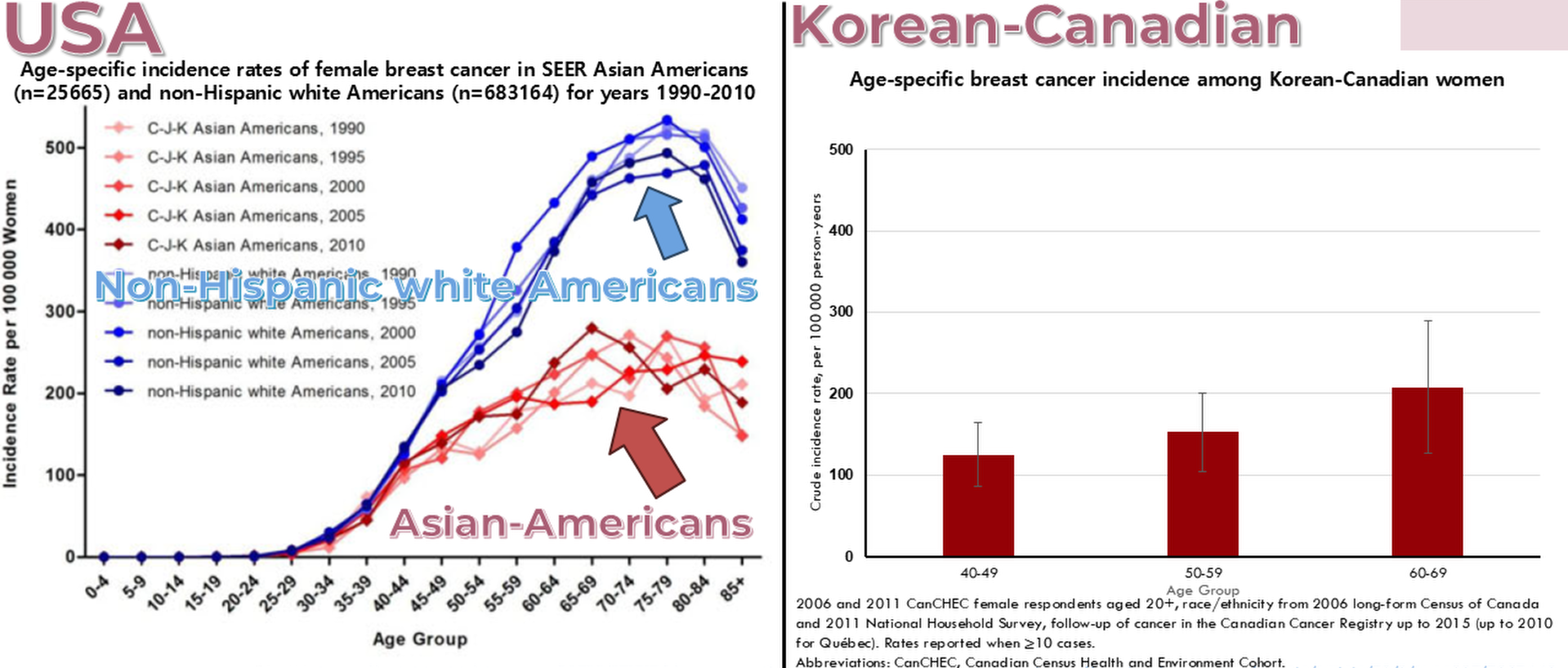
One important thing to note about the Korean-Canadian data is that it is based on a relatively small sample of 17,830 people. Because of this limited sample size, there isn’t enough data to generate reliable incidence rates for the under‑40 and over‑70 age groups. Even for the age groups where incidence rates could be calculated, the margin of error remains quite high.
Comparison of the Age-Specific Breast Cancer Incidence Rates
Here are the graphs representing the Korean, Korean-Canadian and the Canadian data side by side. Again I tried to line up the y-axis for easier comparison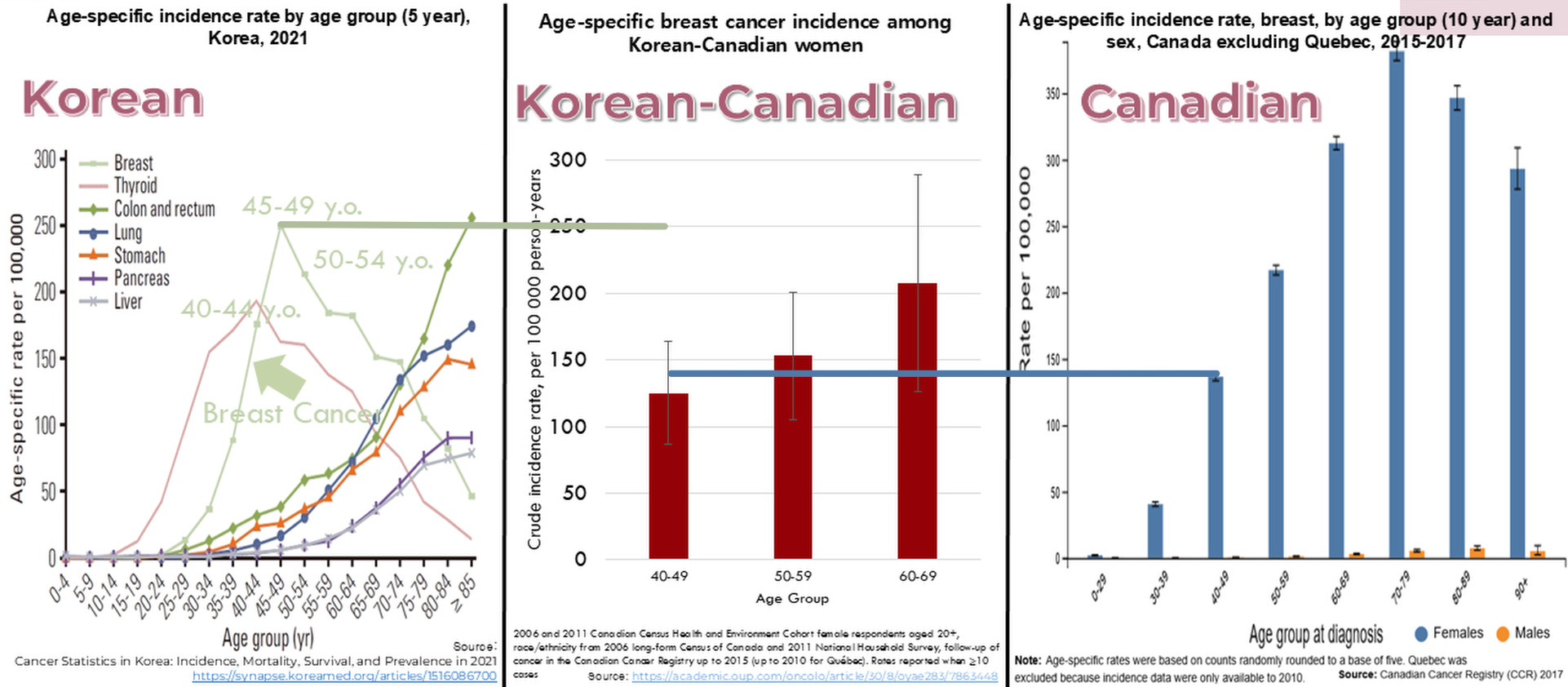
Canadian Provincial and Territorial Screening Programs
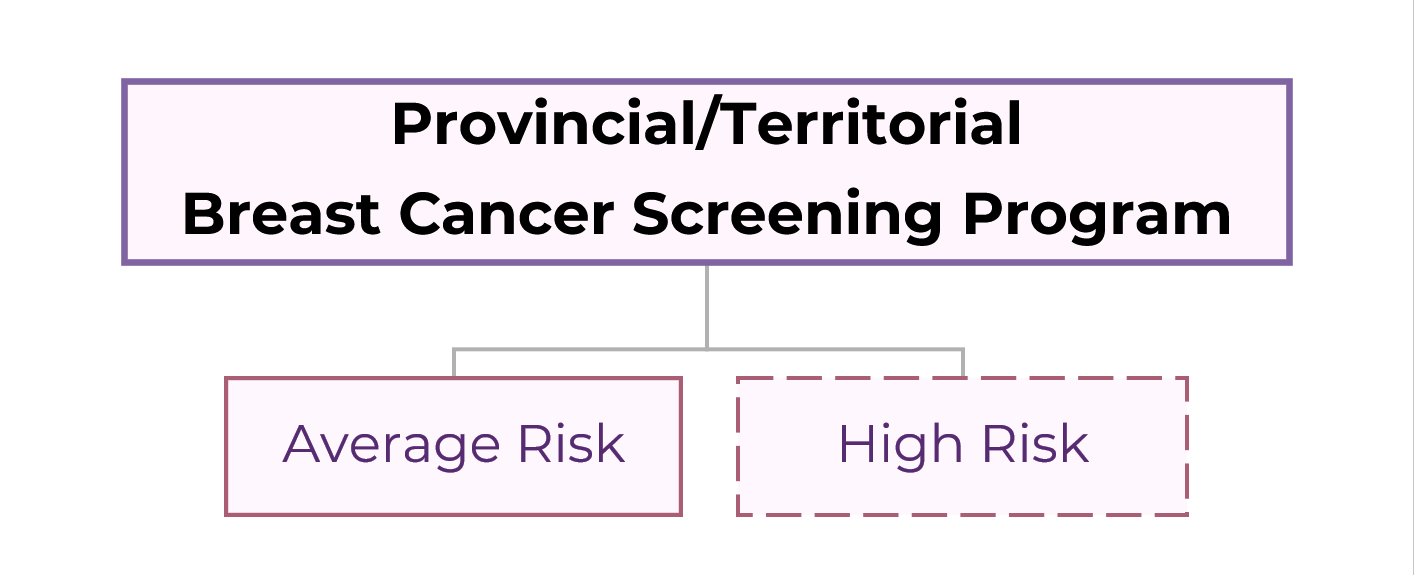
While the national recommendations provide the overall framework, breast cancer screening in Canada is actually organized through Provincial and Territorial Screening Programs, with each region setting its own starting age and screening interval for people with an average risk of developing breast cancer.
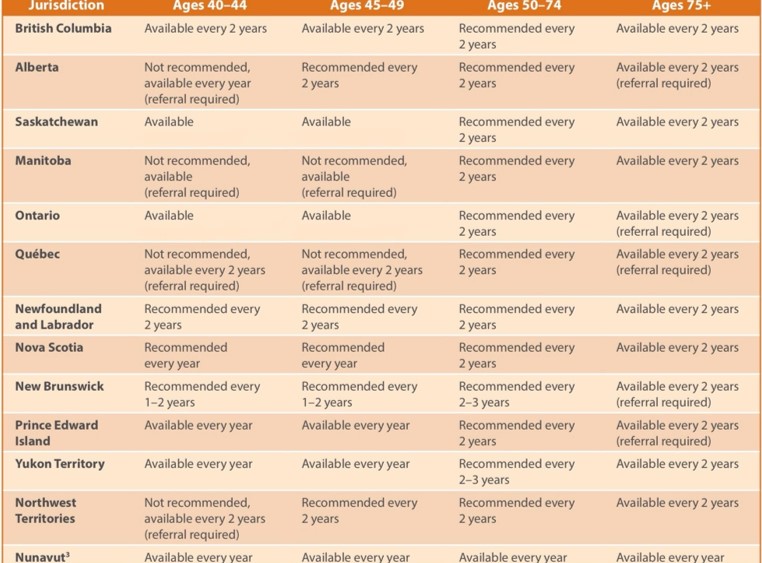
Although I will talk mostly about the average risk screening program in this post, some regions also offer a separate program for those at high risk.
For anyone unsure whether they qualify for high‑risk screening, the Breast Cancer Risk Factors page will explain who is considered high risk and discuss other factors that can increase your risk of developing breast cancer.
Breast Cancer Screening Eligibility
Breast cancer screening is available to:
- Age: 40-74 y.o. (depending on the province)
- Sex: Female or transfeminine with at least 5 consecutive years of hormone use
The exact eligibility criteria for each region’s screening program differs slightly from one another. One thing they all share in common is that people with breast cancer symptoms are not eligible.
This is because screening is a test for people with no symptoms of the disease that they are being tested for.
People who have Breast Cancer Symptoms, would have to go to their primary care provider to get a diagnostic test, not a screening test.
Frequency of Breast Cancer Screening
- 1-2 years (depending on the province) for people who are at average risk of breast cancer
However people with high density breasts may be advised to undergo screening after 1 year even if they are in a region that generally recommend biennial screening.
Breast Density
This picture shows the differences in densities of breasts of 4 different people. None of the individuals in these images have breast cancer.
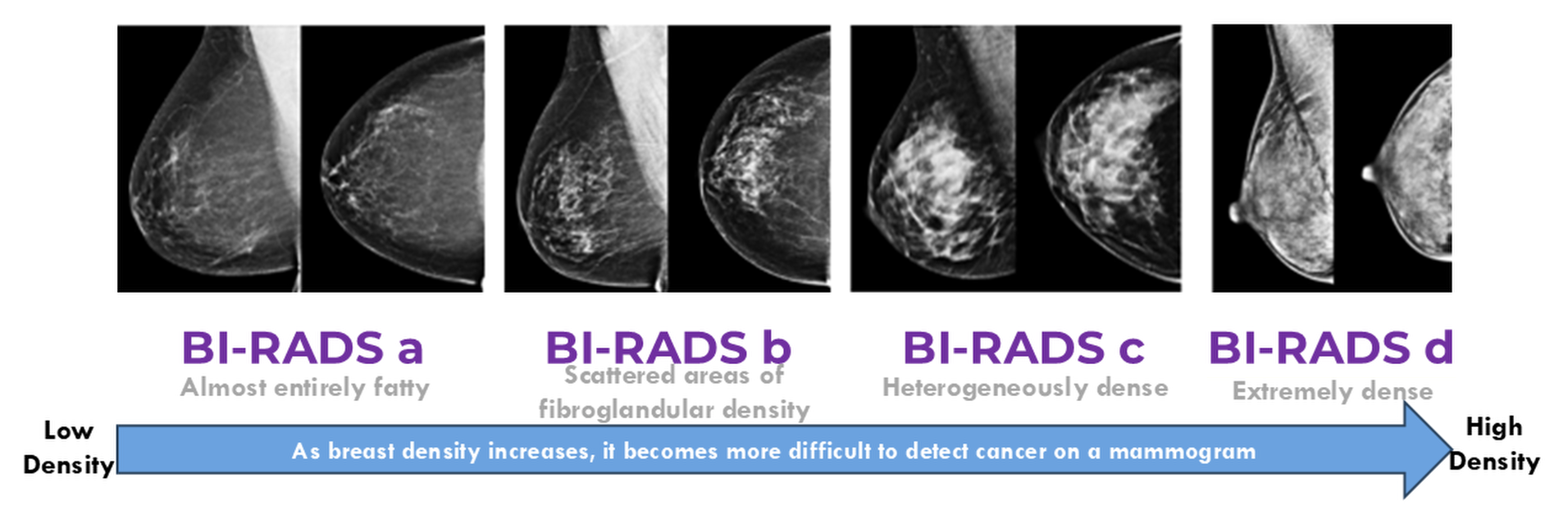
Source: ACR BI-RADS® Atlas, 5th edition, pp. 128-130
A is low density and D is the highest density category.
Breast cancer usually appears white on the mammogram, so in higher density breasts which have more white areas overall, it would be harder to see an abnormal lump. So people with dense breasts may get diagnosed with breast cancer later when it has grown bigger. It is for this reason that people with dense breasts may be advised to undergo screening after 1 year intead of 2.
Who tends to have denser breasts?
- People of younger age
Around half of women over 40 years old have dense breasts. - People of Asian descent
Notably, having dense breasts is a risk factor for breast cancer.
You may find out after your first mammogram how dense your breasts are when you receive your results.
Screening Mammogram

The imaging test used is called a screening mammogram which involves an X-ray of the breast. The person getting screened has their breast placed one at a time between 2 plates which squeeze together to flatten the breast for 10 to 15 seconds. The pictures need to be taken from two different angles so this squeezing will occur twice for each breast, from top to bottom and from side to side. You may feel discomfort or pain while your breast is being compressed during a mammogram.
Despite the discomfort involved in getting a mammogram, there are multiple benefits of getting screened for breast cancer. The Benefits and Risks of Breast Cancer Screening page will discuss this topic.